Edmonds’ newest paper on illicit amphibian trade

Recent PhD graduate Devin Edmonds’ recent paper “Tracking the hidden trade of non-native pet amphibians in the United States,” was the subject of an ACES news release “Where’d you get that frog? Illinois study traces illicit online amphibian trade.” 

graphic with data from abstract and a picture of a frog and a newt


Abstract

The global wildlife trade is contributing to biodiversity loss, with amphibians especially vulnerable and overlooked in trade regulations. The trade in pet amphibians is a growing area of concern, and though there are notable benefits from keeping amphibians, the trade is also associated with introducing invasive species, spreading diseases, and overexploiting wild populations. Despite such risks, we lack a full understanding of the origins of traded species and the ways they enter markets. We combined online ads and import records to analyze the sourcing and pricing of pet amphibians traded in the United States, identifying species likely sourced from domestic production and unrecorded channels. Of the 301 species sold online, we identified 30 advertised more often than expected from import records, indicating they are primarily produced domestically. We also found 18.1% of traded non-native species had no import record and were sold at a 40.4% premium. Brazil, China, and Colombia stood out as countries with native species that were unrecorded in import records. Import at the genus-level was the most common way unrecorded species arrived in U.S. markets, but we also found instances of mislabeling, laundering, and suspected smuggling. The greatest number of imports at the genus-level were from Madagascar, Malaysia, Tanzania, and Vietnam. Our findings show the value of combining classifieds data with import records to identify illicit trade pathways and a need for improved record keeping. To move toward sustainable trade, we advocate engaging with domestic breeders and consumers while improving amphibian identification tools for inspecting wildlife shipments.
Read the full paper in Biological Conservation

Raising frogs and advancing science

With over 40% of species at risk of extinction, amphibians are among the most imperiled groups on Earth. The biodiversity hotspot of Madagascar is not immune from this problem with nearly 47% of its endemic frog species at risk.

In 2010, Association Mitsinjo began working with IUCN and the government to develop an amphibian breeding facility. PhD Candidate Devin Edmonds has been working with the facility and their conservation programs. In addition to establishing captive assurance populations, this facility has provided important information on frog reproductive biology. The facility has successfully reared and released captive bred endangered Golden Mantella frogs into created habitat.

A paper, published today, reported on 1,272 captive breeding events from 11 additional frog species, including phenology, clutch sizes, oviposition, and larval development time. This information is often hard to obtain in the field, and these observations were the first described for many of these species.

Most of the species bred seasonally, but one, Mantella betsileanus, bred throughout the year and made up 86% of egg masses. Most species did not require environmental stimuli, aligning their behaviors with natural seasons, however Heterixalus betsileo only bred when placed in a modified rain chamber.

Researchers also learned that Gephyromantis mitsinjo lays eggs on land where tadpoles develop terrestrially within jelly, a behavior previously theorized but never observed.

The findings can help inform other captive breeding programs and increase success of conservation efforts for other imperiled species.

Read the complete paper in Zoobiology: Rakotoarisoa, Justin Claude, Andolalao RakotoarisonSolonirina RasoanantenainaEric RobsomanitrandrasanaSamina Sidonie Sam EdmondsJeanne SoamiarimampiononaEdupsie TsimialomananaSebastian WolfDevin Edmonds. 2024. Captive breeding reveals insights into the ecology and reproductive biology of 11 little-known Malagasy frog species. Zoobiology: https://doi.org/10.1002/zoo.21876


New paper on endangered Harlequin Mantella populations

Mantella cowani frog
photo by Devin Edmonds

The Harlequin Mantella is one of Madagascar’s most threatened frog species, known from 13 localities. The small, strikingly-colored frog that inhabits mountainous streams has been impacted by habitat degradation and illegal collection for the pet trade.

As part of a species conservation plan, PhD Candidate Devin Edmonds and his colleagues surveyed 11 of those sites and detected the frog at eight sites. The species is believed extirpated from the other three sites. Knowledge from local community members revealed two previously unknown locations, highlighting the importance of collaboration and engagement with the community.

Based on repeated surveys of three of the sites between 2015 and 2023, these small frogs can live 9 or more years in the wild as adults encountered in 2015 were still alive in 2023.

Despite finding two new sites, the populations are small and the frog is still imperiled. Conservation recommendations include upgrading the species to Critically Endangered. Continued monitoring of populations and habitats, and protection from poaching are necessary to conserve the species.

Read the paper published today in PeerJLife https://peerj.com/articles/17947

Edmonds, D., R.R. Andriantsimanarilafy, A. Crottini, M.J. Dreslik, J. Newton-Youens, A. Ramahefason, C. J. Randrianantoandro, and F. Andreone. 2024. Small population size and possible extirpation of the threatened Malagasy poison frog Mantella cowanii. PeerJ, DOI 10.7717/peerj.17947


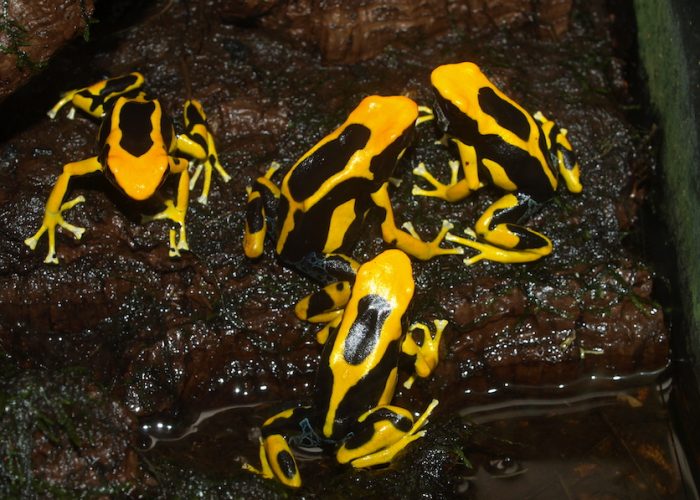
Where do those pet frogs come from?

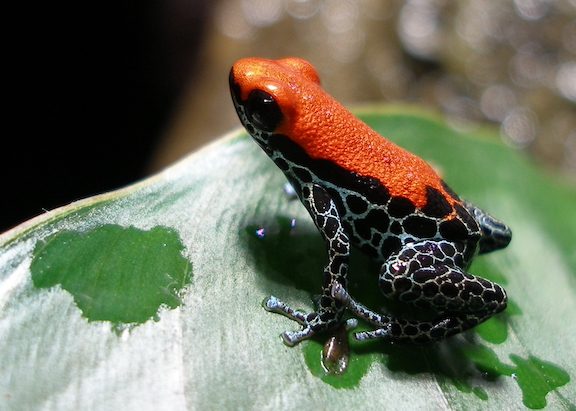
  • red and black frog
    Ranitomeya reticulata: Red-backed Poison Frog
Photos by Devin Edmonds

PACE Lab doctoral student Devin Edmonds investigated the origins of poison frogs in the pet trade, tracking down ethical and illegal sources. The results of his study were published in Herpetological Review.

Read the full story here!